
TL;DR: Under Brown v. Progressive, Florida does not require physical contact for a hit-and-run uninsured motorist claim. The injured person still has to prove the fleeing car existed and caused the crash. The evidence that proves it (911 timing, independent witnesses, camera footage, debris, and paint transfer) is easiest to secure in the first week and much harder to recover after that.
Your phone has a blurry photo of a gray sedan. Somewhere, a stranger who stopped to help has a name you never wrote down. The driver who caused this did not stay, and now the body aches, the car sits damaged, and a quiet worry keeps returning: what if no one believes there was another car at all? That worry is understandable, and it can be answered. A hit-and-run claim is not won by the loudest account. It is won by the steadiest proof, gathered early and kept safe while the details are still within reach.
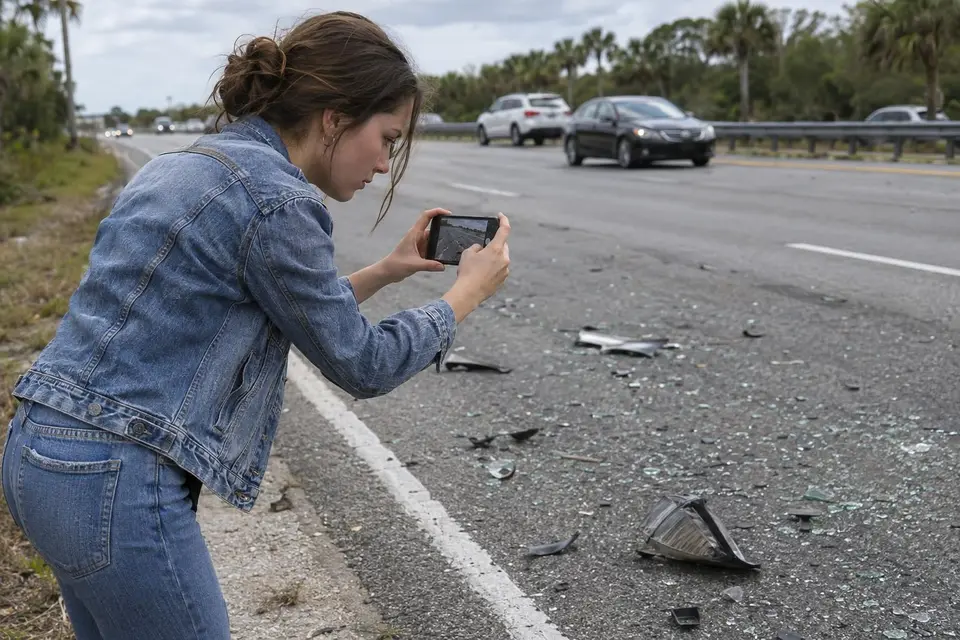
Why a Florida Hit-and-Run Claim Turns on Proving the Phantom Vehicle Existed
Florida law expects drivers to stay. Fla. Stat. § 316.027 requires a driver involved in a crash that causes injury, serious bodily injury, or death to stop immediately and remain at the scene to give information and reasonable aid. When that driver flees, the injured person usually turns to their own uninsured motorist (UM) coverage. Under Fla. Stat. § 627.727, a policy with bodily injury liability coverage must include UM coverage unless a named insured rejects it in writing. It protects insureds who are legally entitled to recover damages from the owner or operator of an uninsured vehicle.
The phrase "legally entitled to recover" carries weight. The unidentified driver's fault still has to be shown. In Brown v. Progressive Mutual Insurance Co., 249 So. 2d 429 (Fla. 1971), the Florida Supreme Court held that a policy clause limiting hit-and-run UM coverage to cases of physical contact is void as against public policy. A no-contact crash, such as being forced off the road, can still be covered. The court also left the burden of proving the accident happened as described with the injured claimant. Whether it happened that way is a question of fact.
Florida's statute does not list an independent witness or any other corroboration as a required element. Corroboration is what persuades an adjuster or a jury. When the other car is gone, proof that it was ever there becomes the center of the claim. It also determines how much of the available coverage, including stacked UM coverage under a Florida policy, can actually be reached.
The 911 Call and the Florida Traffic Crash Report
The time of the first call is often the earliest independent marker that a second vehicle was involved. Fla. Stat. § 316.065(1) requires a driver in a crash causing injury or death to notify law enforcement immediately, by the quickest means of communication. The statute contains no 24-hour grace period. A call placed within minutes of impact, describing a car that drove away, is hard to dismiss as an afterthought.
Public records rules help hold that moment in place. Under Fla. Stat. § 119.07(1)(h), once a written request is made to the records custodian, the requested record may not be disposed of for 30 days. An oral request does not trigger that hold. How long an agency keeps 911 audio or dispatch logs should not be assumed, so a prompt written request is the safer course. Under Fla. Stat. § 365.171(12)(a), information identifying a 911 caller is confidential and exempt from disclosure. A bystander's name may therefore be redacted from public copies even when the call itself is released.
The officer's Long Form report under Fla. Stat. § 316.066 must list the date, time, location, vehicle descriptions, and the names and addresses of witnesses. The report is confidential and exempt from public disclosure for 60 days after filing, but it can be released immediately to the parties, their legal representatives, and their insurers on a sworn statement. One limit matters here. Under § 316.066(4), a crash-involved person's report and statements to the officer cannot be used as evidence in a civil trial. The crash report points toward proof. Witnesses and physical evidence have to carry it.
Independent Witnesses and Witness Statements
A stranger with no stake in the outcome is often the most persuasive voice in a phantom vehicle claim. That same person is also the easiest to lose. People who stop to help tend to leave once the ambulance arrives, and memory of a car's color, make, or direction fades within days.
Consider a hypothetical: a driver on a Tampa interstate is cut off by a gray sedan, swerves into the guardrail, and the sedan never slows. A woman pulls over, calls 911, and tells the injured driver she saw the whole thing. Her name never makes it onto paper. Three weeks later, the insurer notes that no vehicles touched and asks whether the driver simply lost control. If her name and phone number had been written down at the scene, or passed to the responding officer for the crash report, a short written statement from her would answer that question directly.
The Long Form report is the first place to look for witness names. Tow operators, nearby shop employees, and other drivers who stayed are also worth tracking down. A statement taken while the memory is fresh, in the witness's own words, holds up far better than one assembled months later.
Cameras, Debris, and Paint Transfer: Evidence Preservation Before It Disappears
Digital footage is often the most decisive proof and the most fragile. A business or homeowner who simply happened to record the crash should not be assumed to have any duty to keep the footage, and many systems record over themselves on their own schedule. The public-records hold under § 119.07 binds government agencies, not private businesses or homeowners. A polite, prompt request to a store manager may be the only thing standing between the footage and the overwrite cycle.
- Your own dashcam: export and back up the file before the device loops over it.
- Gas stations, convenience stores, and restaurants: these businesses often have cameras facing the road or the parking lot.
- Doorbell and home cameras: these may face residential streets near the crash.
- Other drivers' dashcams: witnesses at the scene may have one.
- Debris: a broken mirror housing, lens fragments, or trim pieces that did not come from your car.
- Paint transfer: foreign-colored paint on your bumper or door, photographed before any repair.
Under Brown, physical contact is not required. When contact did occur, though, a gray streak on a white fender is quiet, objective proof. The damaged vehicle itself is evidence. Releasing it for repair or salvage before it is documented can erase that proof. Florida courts have recognized that a party who should reasonably foresee litigation has a duty to preserve evidence, and destroyed evidence can support an adverse inference against the party that discarded it (League of Women Voters of Fla. v. Detzner, 172 So. 3d 363 (Fla. 2015)). The Fourth District later applied that inference against a plaintiff's side. That means an injured person's own photos, dashcam files, debris, and vehicle deserve the same careful handling.
Notice Requirements and Why Waiting Weeks Invites Doubt
Time works against a hit-and-run claim in two ways. Evidence fades, and notice to the insurer can come too late. In Bankers Insurance Co. v. Macias, 475 So. 2d 1216 (Fla. 1985), the Florida Supreme Court held that when an insured breaches a policy's notice provision, prejudice to the insurer is presumed. Late notice does not automatically forfeit the claim, but the insured must then show the insurer was not harmed by the delay. Many policies also carry their own conditions, such as a police-report window or a sworn statement. Those conditions come from the policy, not from statute, so the policy language needs to be read early.
Several other clocks start on day one:
- PIP benefits: under Fla. Stat. § 627.736, initial care from a listed provider must occur within 14 days for PIP to pay medical expenses. The vehicle owner's own insurer pays, so the fleeing driver does not need to be identified.
- Crime victim compensation: where it applies, an award under Fla. Stat. § 960.13 generally requires that the crime was reported within five days, unless the department finds good cause for the delay. Section 316.027 itself refers to the Crimes Compensation Trust Fund.
- Filing deadlines: negligence claims carry a two-year limit under Fla. Stat. § 95.11(5)(a). A UM claim against one's own insurer generally falls under the five-year written-contract period, accruing on the accident date (Woodall v. Travelers Indemnity Co., 699 So. 2d 1361 (Fla. 1997)).
Those filing deadlines feel distant, and that is exactly the trap. Neither deadline preserves a single frame of footage or a single witness's memory. Coverage also has limits. UM coverage can be rejected in writing, and UM pain-and-suffering damages require meeting the injury threshold in Fla. Stat. § 627.737(2). Knowing what the policy holds helps decide which evidence matters most.
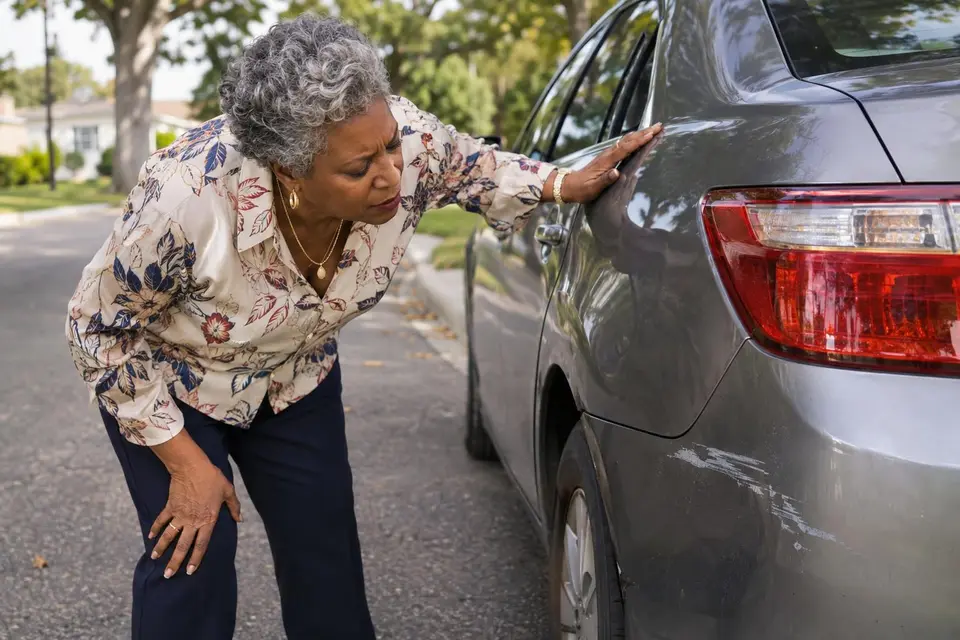
An insurer reviewing a claim filed weeks later, with no footage, no witness, and no debris, has room to wonder whether the other car existed. A claim built in the first week leaves far less room for that doubt. A Tampa car accident attorney can send written records requests, contact businesses, and secure the vehicle while that window is still open.
Closing Remarks
If the 911 records have not been requested in writing, if the stranger who stopped still has no name on paper, or if a nearby business camera is recording over the moment the gray sedan drove away, the proof that the other car existed is thinning with every passing day.
Chris DeBari and CDB Injury Law bring more than 27 years of steady advocacy to preserving that proof, so you can focus on healing while we build the hit-and-run claim around you. You do not have to face this alone. Contact us today and let us talk about your recovery.
Frequently Asked Questions
Does a Florida hit-and-run claim require the other car to have touched mine?
No. In Brown v. Progressive, the Florida Supreme Court voided policy clauses that limit hit-and-run UM coverage to physical-contact cases. The injured person still carries the burden of proving the crash happened as described. That is why witnesses and footage matter so much in a no-contact crash.
Is the police crash report enough to prove the other driver existed?
Usually not on its own. Under Fla. Stat. § 316.066(4), a crash-involved person's report and statements to the officer cannot be used as evidence at a civil trial. The report remains valuable because it lists witness names, the time, and the location. Those details lead to evidence that can be used.
Can a business be forced to keep its security footage?
It is safest not to count on it. The public-records hold in Fla. Stat. § 119.07 applies to government agencies, not to private businesses or homeowners, and a bystander who happened to record the crash should not be assumed to have a duty to keep the footage. Overwrite schedules vary from system to system. A prompt, specific request is often the deciding factor in whether the footage survives.
What happens if the insurer was notified late?
Under Bankers Insurance Co. v. Macias, late notice creates a presumption that the insurer was prejudiced. The claim is not automatically lost, because the insured can rebut that presumption with evidence. Early notice avoids the issue entirely.
Will PIP pay even though the driver was never found?
Generally, yes. Under Fla. Stat. § 627.736, the vehicle owner's own insurer pays PIP benefits, so they do not depend on identifying the other driver. Initial care must come from a listed provider within 14 days of the accident. For a pedestrian or cyclist, PIP depends on physical contact with a motor vehicle.
References
- Crash involving death or personal injuries (Fla. Stat. § 316.027)
- Motor vehicle insurance; uninsured and underinsured vehicle coverage; insolvent insurer protection (Fla. Stat. § 627.727)
- Brown v. Progressive Mutual Insurance Co., 249 So. 2d 429 (Fla. 1971)
- Crashes; reports; penalties (Fla. Stat. § 316.065)
- Inspection and copying of records; photographing public records; fees; exemptions (Fla. Stat. § 119.07)
- Fla. Stat. § 365.171
- Written reports of crashes (Fla. Stat. § 316.066)
- League of Women Voters of Fla. v. Detzner, 172 So. 3d 363 (Fla. 2015)
- Bankers Insurance Co. v. Macias, 475 So. 2d 1216 (Fla. 1985)
- Required personal injury protection benefits; exclusions; priority; claims (Fla. Stat. § 627.736)
- Awards (Fla. Stat. § 960.13)
- Limitations other than for the recovery of real property (Fla. Stat. § 95.11)
- Woodall v. Travelers Indemnity Co., 699 So. 2d 1361 (Fla. 1997)
- Tort exemption; limitation on right to damages; punitive damages (Fla. Stat. § 627.737)